Back to Amphibians
Amphibian Fact Sheet
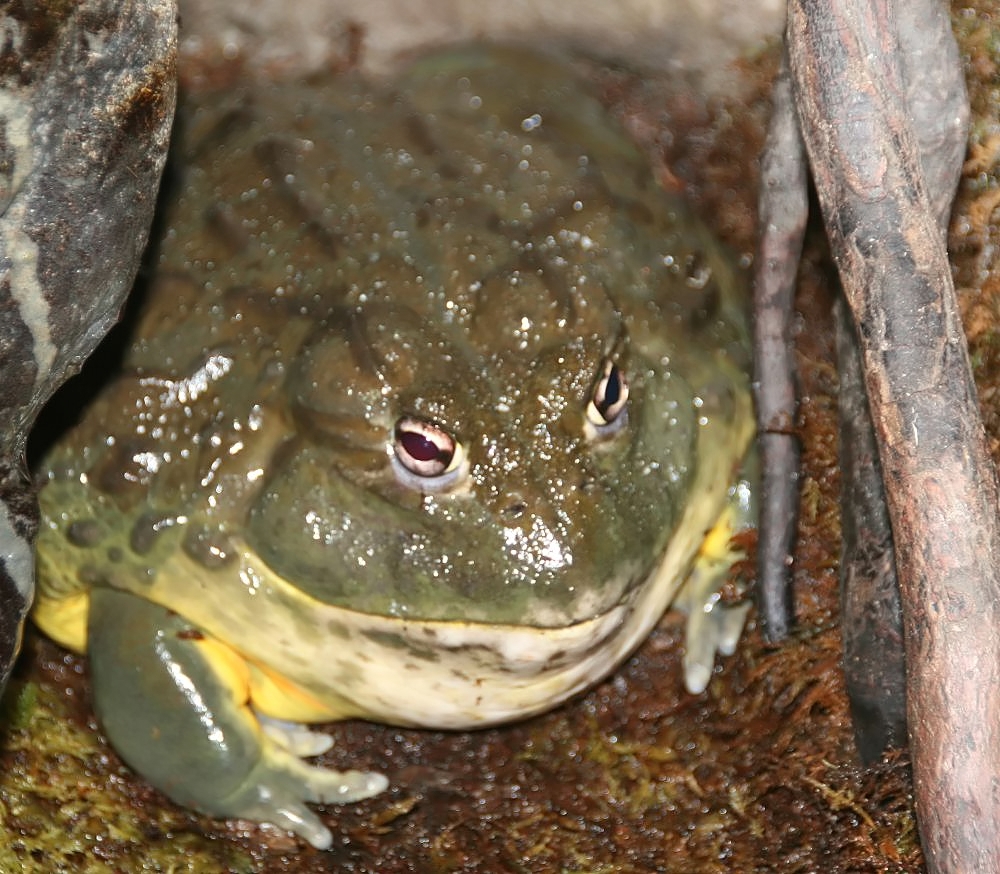
Giant African Bullfrog
LC· Least ConcernPyxicephalus adspersus
Savannah grasslands with seasonal pools and pans.
Fact Sheet
About this animal
Key facts about the giant african bullfrog.
Common Name
Giant African Bullfrog
Scientific Name
Pyxicephalus adspersus
Classification
Amphibia • Anura • Pyxicephalidae
Distribution
Southern and eastern Africa — from South Africa north to Kenya.
Habitat
Savannah grasslands with seasonal pools and pans.
Range map · red pin marks a typical locationView larger map
Lifecycle
After heavy rains, males dig shallow pools where females lay thousands of eggs; tadpoles change into froglets in about 3 weeks.
Diet
Carnivore: insects, other frogs, lizards, small snakes, birds and rodents. Will eat almost anything it can fit in its mouth.
Size
Up to 24 cm (9.5 in); can weigh over 1.4 kg — one of the largest frogs on Earth.
Lifespan
20–35 years, sometimes more.
Conservation Status
LC· Least Concern
Least Concern, though local populations are declining.Behaviour
Spends most of the year buried underground; only comes out to breed after heavy rain. Males guard tadpoles fiercely.
Adaptations
Forms a hard mucus cocoon around itself to survive months of drought. Powerful jaws with two tooth-like 'fangs' on the lower jaw.
Predators
Adults have few predators; tadpoles are eaten by birds, fish and other frogs.
Interesting Facts
- One of the very few frog species where the father guards the babies.
- Can stay buried and asleep for up to 10 months waiting for rain.
Photo: Wikimedia Commons (CC BY-SA) · Habitat: Savanna pool, southern Africa — Wikimedia Commons