Back to Amphibians
Amphibian Fact Sheet
European Green Toad
LC· Least ConcernBufotes viridis
Open grassland, farmland, dunes and dry stony places — often near shallow ponds.
Fact Sheet
About this animal
Key facts about the european green toad.
Common Name
European Green Toad
Scientific Name
Bufotes viridis
Classification
Amphibia • Anura • Bufonidae
Distribution
Central and eastern Europe, west across to North Africa and central Asia.
Habitat
Open grassland, farmland, dunes and dry stony places — often near shallow ponds.
Range map · red pin marks a typical locationView larger map
Lifecycle
Females lay double strings of up to 12,000 eggs in shallow water; tadpoles hatch in a week and become toadlets after 2–3 months.
Diet
Insectivore: beetles, ants, spiders, worms and moths.
Size
6–10 cm (2.5–4 in).
Lifespan
About 10 years in the wild.
Conservation Status
LC· Least Concern
Least Concern, but declining in parts of Europe due to habitat loss.Behaviour
Mostly nocturnal. Males have a beautiful long trilling call, like a canary or a cricket.
Adaptations
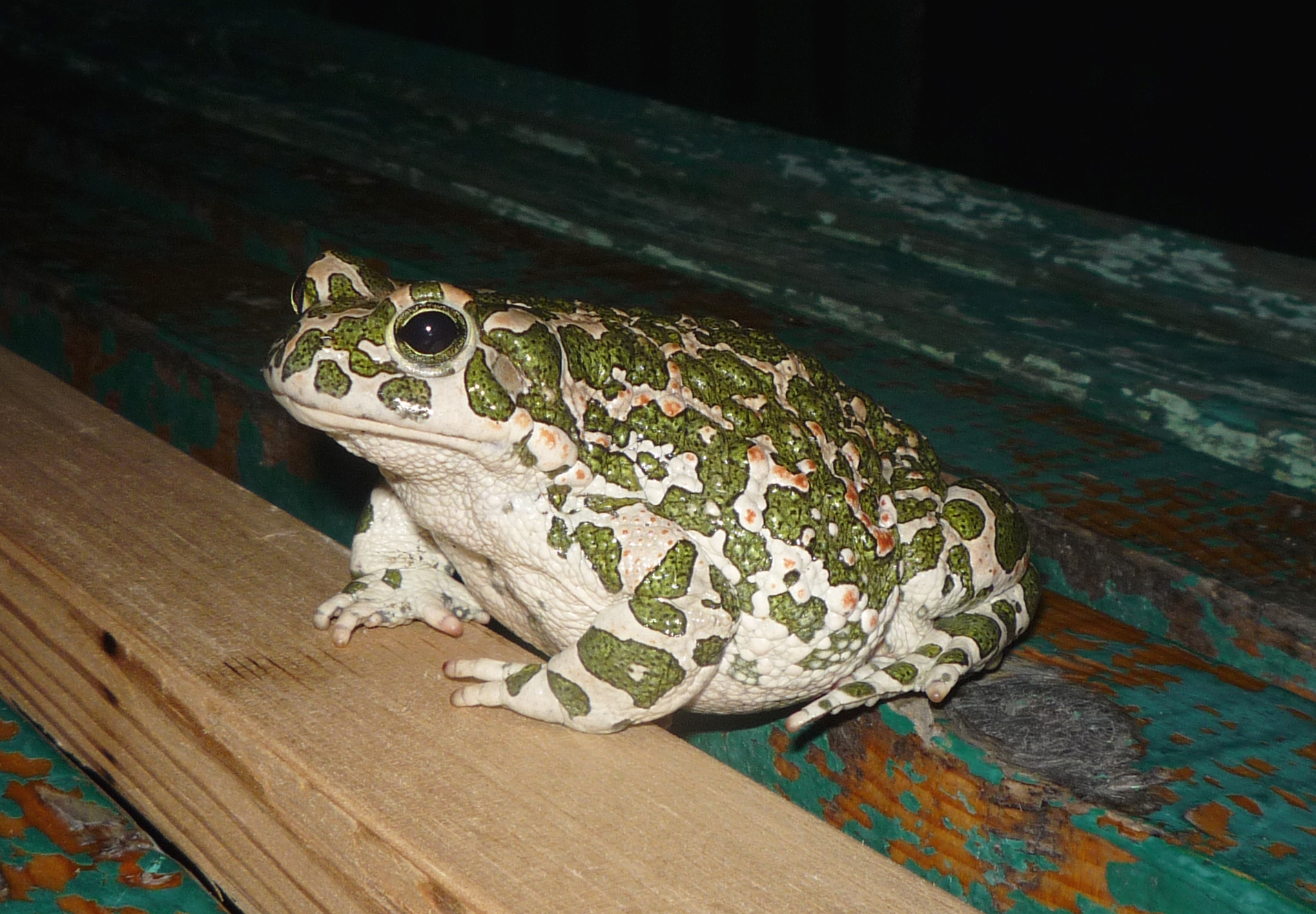
Bright green and grey blotches break up its shape against stones and dry grass. Copes with saltier and drier places than most toads.
Predators
Herons, storks, grass snakes, hedgehogs and foxes.
Interesting Facts
- One of the most cold-tolerant toads — can be active in cool spring weather.
- Its long trilling call can carry over a kilometre on a still night.
Photo: Wikimedia Commons (CC BY-SA) · Habitat: Hortobágy steppe, Hungary — Wikimedia Commons